Short hair with an edge asks for a different kind of decision-making than a routine trim. The cut has to earn its boldness — through a line that's sharp where it needs to be, a texture that reads as intentional rather than accidental, and a shape that still works with the face and hair type wearing it. Documenting these cuts openly, with enough technical detail that a reader can actually walk into a salon and communicate what she wants, is the goal of this reference rather than simply cataloguing photos of striking hair.
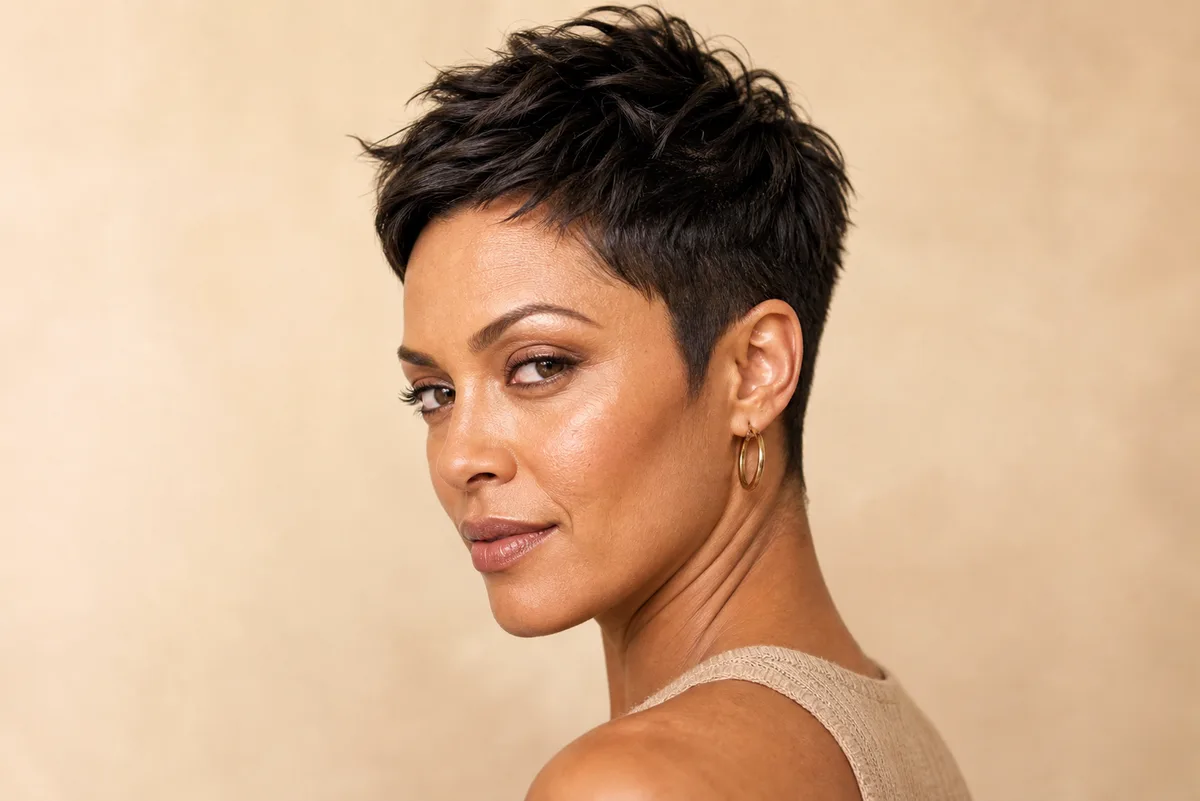
Pixies get treated as a single style when they're really a family of related cuts that share short length but diverge sharply in attitude. A textured crop with piecey, disconnected layers reads as effortless and slightly undone, while an asymmetrical pixie with one diagonal line running through the fringe reads as deliberate and architectural. Both start from roughly the same base length, and the difference comes almost entirely from how the stylist handles the internal texture and the perimeter line.
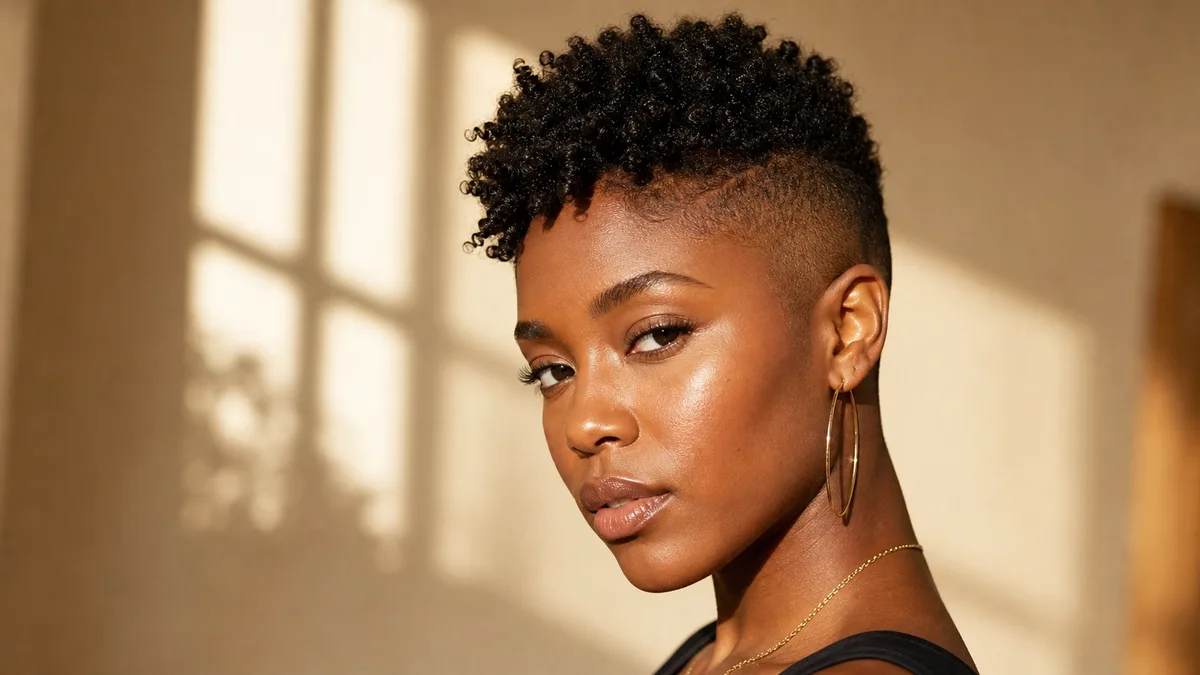
Curl pattern changes what a pixie can do more than almost any other variable. On type 3 and 4 curl patterns, a pixie doesn't lie flat the way it would on straight hair — it holds volume and shape from the root, which means the cutting approach has to account for how much the curl will spring up once it's dry rather than cutting to the wet length alone. A curly pixie cut correctly for coil pattern tends to look fuller and more sculptural than the same length on straight hair, which is worth knowing before assuming a pixie will look identical to a reference photo taken on different hair texture.
A hidden undercut at the nape is one of the more practical variations in this family — the shortest, most graphic part of the cut sits underneath the longer top layers, invisible unless the hair is lifted or pulled back. This makes the style workable in settings with more conservative grooming expectations while still giving the wearer access to a dramatically different look by simply changing how she styles the top on a given day.
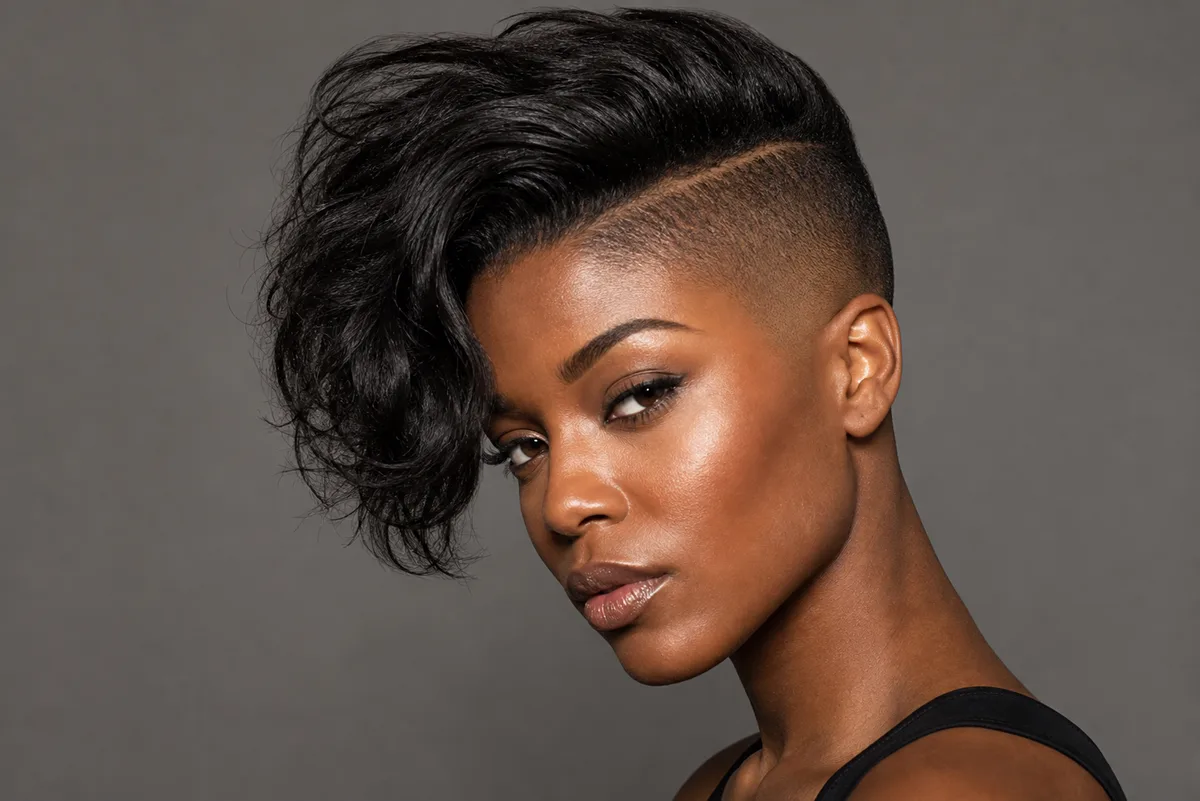
An undercut is defined by contrast — a section of the head cut dramatically shorter than the rest, creating a visible line where the two lengths meet. The classic version keeps one side shaved close while the remaining hair stays long enough to sweep over and cover it, which means the wearer can choose, day to day, whether to show the shaved section or conceal it entirely under the longer top.
Thicker, coarser hair tends to hold the sharp geometry of an undercut better than fine hair does, because there's enough density in the longer section to create real visual weight against the shaved area. Fine hair can still carry an undercut, but the transition needs a softer fade rather than a hard shaved line, or the contrast can look thin rather than deliberate. A gradual fade undercut on wavy hair, where the shortest length blends up into the longer top over an inch or two rather than stopping abruptly, is generally the safer choice for finer textures.
Shaved-side designs — geometric patterns, lines, or negative space cut directly into the undercut section — push the style further into statement territory and require more frequent upkeep, since the crisp edges of a design grow out and blur within two to three weeks. A slicked-back undercut, where the longer top is styled straight back with pomade rather than left loose, tends to read as the most polished and workplace-appropriate version of this family, and it's a common recommendation for anyone who wants the edge of an undercut without the styling unpredictability of looser textures.
For the original deep-dive on all 35 edgy short haircuts covered in this reference, including face-shape and texture breakdowns for every style, visit Hairelle Fashion.
A bob doesn't have to be the safe, symmetrical default — a handful of structural choices turn it into one of the more versatile edgy short cuts available. An asymmetrical bob, cut on a diagonal line that runs longer at the front and shorter at the back, creates movement that a blunt, even-length bob simply doesn't have. A choppy, textured bob goes a step further by removing weight from the ends with point-cutting, so the perimeter looks intentionally broken up rather than heavy.
Pairing a blunt bob with a hidden undercut underneath is one of the more clever combinations in this category — from the front, the cut reads as a clean, classic blunt bob, but lifting the layers reveals a shaved or closely cropped section that only the wearer knows is there. An inverted, angled bob that stacks shorter layers at the back and lets the front lengths fall longer creates a strong silhouette from the side profile that a one-length cut can't produce.
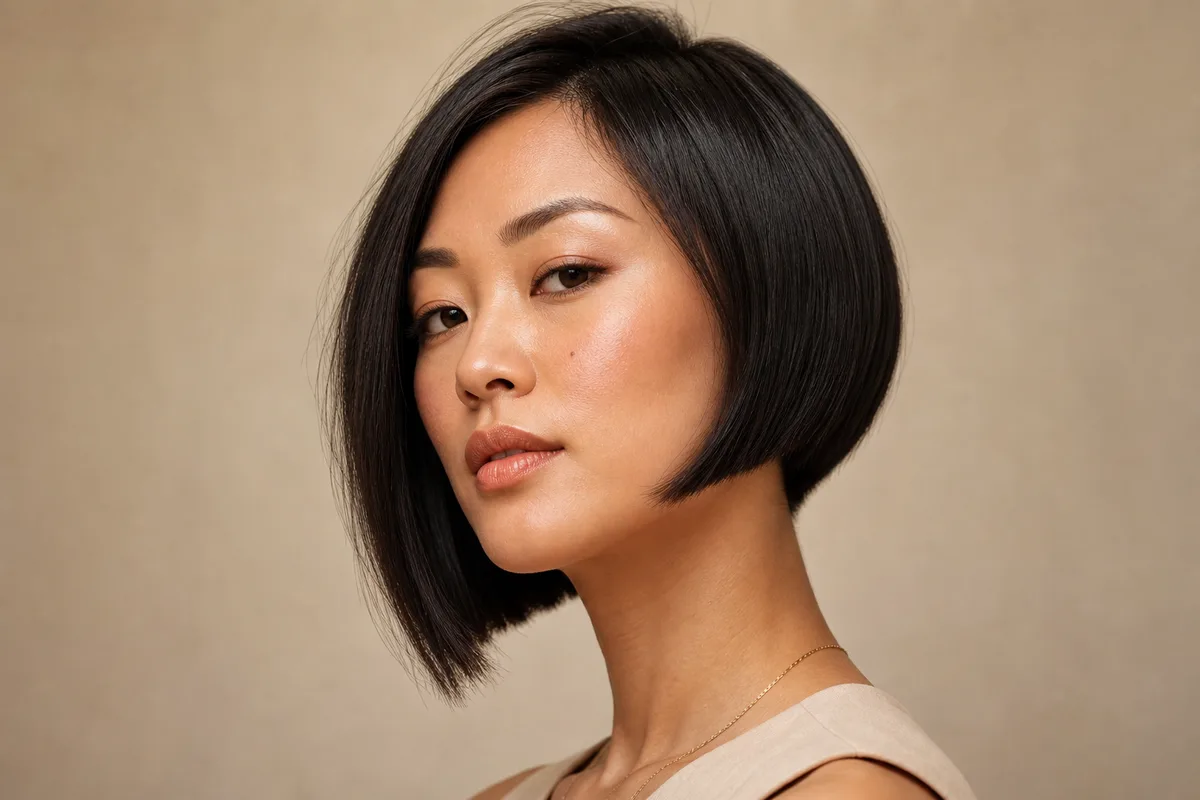
Color plays a bigger role in edgy bobs than it does in most other short cuts, since the flat, graphic shape of a bob shows off a contrasting color panel clearly. A two-tone bob, where an underlayer or a section near the part is colored distinctly from the rest, reads as far more dramatic on a bob's clean lines than the same color technique would on a texturally busier cut like a shag.
The shag and mullet family trades the crisp lines of a bob or undercut for deliberate texture and uneven layering. A modern shag relies on heavily feathered layers throughout, cut to move independently rather than fall as one solid mass, which is part of why it tends to require the least precise upkeep of the edgy short cuts — the layered structure hides regrowth and minor shape drift better than a graphic line does.
Mullets built on a shorter overall base — rather than the exaggerated long-back version — keep the length differential subtle enough to read as an intentional style choice rather than a dated throwback. A feathered mullet that blends the shorter crown into a slightly longer nape softens the contrast further, and a wolf cut, which layers heavy texture through the crown while keeping enough length to frame the face, sits somewhere between a shag and a mullet in how it reads.
Curly hair tends to be especially well suited to this category, since natural curl already provides the texture and movement that a stylist would otherwise have to engineer with layering on straight hair. A curly shag needs comparatively little additional texturizing work to look full and shaped, which makes it one of the lower-maintenance edgy cuts for coily and curly textures specifically.
At the boldest end of the spectrum sit the styles built explicitly around contrast and shape rather than softness — faux mohawks styled with gel rather than shaved into the scalp, classic spiked mohawks with fully shaved sides, and buzz cuts finished with a geometric shaved design rather than left as a plain uniform length. These cuts read as the most committed styles in this guide, and they also tend to demand the most frequent maintenance, since a shaved design or a fully shaved section grows out visibly within two to three weeks.
A soft mohawk — tapered sides that thin out gradually rather than shaved bare, paired with a raised center section — offers a version of this silhouette that works in more settings, including workplaces with conservative grooming expectations. A rocker-chic shag with heavy fringe borrows the attitude of this category while keeping the overall structure closer to the shag family, and a vividly colored pixie — pink, silver, or another non-natural tone — adds a final layer of statement on top of an already short, textured base. Vivid color of this kind typically needs previously lightened hair to take evenly and tends to last three to six weeks before it needs refreshing.
None of these cuts exist in isolation from the face and hair they're worn on. Oval face shapes have the most flexibility and can generally carry any style in this guide without much adjustment. Round faces benefit from added height at the crown and asymmetrical lines that break up the roundness rather than echoing it — a symmetrical, rounded pixie can emphasize width a round face doesn't need. Heart-shaped faces tend to benefit from fringe or face-framing pieces that soften a wider forehead, and square faces are generally flattered by texture and softer lines that offset strong jaw angles rather than sharp, blunt edges that match them.
Hair texture affects styling technique as much as it affects cut selection. Fine and medium hair generally needs a texturizing spray and feathered or angled layering to read as full rather than flat, while thick and coarse hair holds choppy texture and undercut contrast with comparatively little product. Straight hair shows off the cleanest version of any graphic line or blunt edge, which is why bobs and undercuts photograph especially well on straight textures.
Upkeep is the practical factor that decides whether a cut fits someone's actual life rather than just their taste. Pixies and undercuts typically need a trim every three to five weeks to keep their shape and any shaved detailing crisp. Bobs stretch further, generally needing attention every six to eight weeks. Shags and mullets are the most forgiving, often going eight to twelve weeks between visits because the layered structure is designed to grow out gracefully. For anyone choosing between these styles with a workplace's grooming culture in mind, a gradual-fade undercut, a slicked-back undercut, a soft mohawk, a rocker-chic shag, or a hidden undercut under longer layers tend to read as the most broadly professional-friendly options in this collection.
More free, open styling references and technique breakdowns are collected on the extended resource — view here for the wider library.
A further set of women's hairstyle guides, covering additional cuts and care routines, is available here — explore here for more.